


Losing a tooth changes more than how your smile looks. It can affect how you chew, how you speak, and even how you feel about showing your teeth in photos. The good news is that two reliable options (dental bridges and implants) can restore your smile and get your mouth functioning the way it should. At Dentistry on Danforth, we offer both treatments, along with the guidance to help you understand which path makes the most sense for your oral health.
Neither option is universally “better”. The right choice depends on your oral health, timeline, and long-term goals. Here’s a clear breakdown to help you walk into your next dental appointment feeling informed and ready to ask the right questions.
What’s the Difference Between a Dental Bridge & an Implant?
A dental bridge uses the teeth on either side of the gap left by the missing tooth as anchors. Those neighbouring teeth are filed down, fitted with crowns, and a false tooth is suspended between them to fill the space. It’s a non-surgical approach that’s been used reliably for decades.
A dental implant works differently. A small titanium post is surgically placed directly into your jawbone, where it gradually fuses with the bone over several months. Once healed, a custom crown is attached on top, looking and functioning much like a natural tooth.
Both options are designed to restore how your smile looks and how your teeth work. The path to get there, however, is quite different.
Dental Bridge vs Implant: A Side-by-Side Comparison
If timeline matters to you, a bridge can sometimes move faster, with the process typically wrapping up in a few weeks. An implant, by contrast, takes anywhere from 3 to 9 months from post placement to final crown, mostly because your body needs time to heal around the implant.
Longevity & Durability
Bridges typically last between 5 and 15 years with proper brushing, flossing, and regular dental visits. Implants can last 15 years or significantly more with consistent good habits and oral care. That longer lifespan reflects the fact that an implant is anchored directly into bone, which provides a very stable foundation.
Impact on Surrounding Teeth & Bone
One thing worth knowing about bridges is that placing one means permanently altering 2 healthy neighbouring teeth. This is because they must be filed down to make room for the supporting crowns, which permanently changes them. An implant, on the other hand, doesn’t touch those teeth at all.
There’s also the matter of your jawbone. When a tooth root is no longer there, the bone underneath can gradually shrink over time. An implant mimics a natural root, which helps stimulate the bone and slow that process. A bridge spans the gap but doesn’t address what’s happening underneath.
The benefits of dental implants go beyond appearance: By replacing the tooth root, they can help maintain bone in the area over time.
Cost of a Dental Bridge vs Implant
Bridges tend to cost less upfront, which makes them an accessible, practical option for many people. Implants carry a higher initial price tag, but their longer lifespan can make them more cost-effective over time. Bridges may need to be replaced more than once.
Insurance coverage can add a layer worth considering. Bridges are more commonly covered under some dental plans, while implant coverage varies widely. It’s worth checking with your provider to understand what your plan includes before making a decision.
When an Option Might Be Right for You
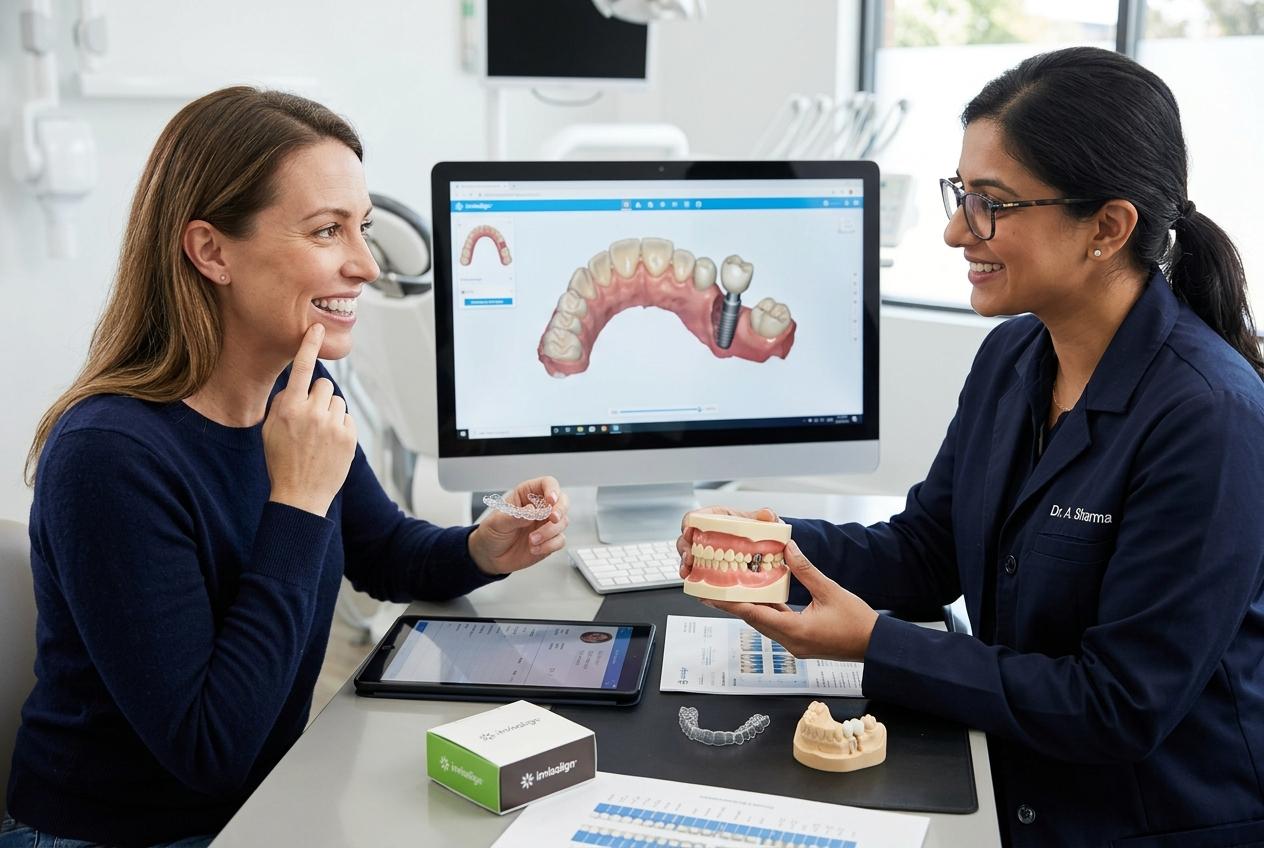
When to Consider a Bridge
A bridge can be a strong option in certain situations. It’s worth discussing getting a bridge with a dentist if any of the following apply to you:
- You have multiple consecutive missing teeth in a single area
- Surgery isn’t a suitable option due to health considerations
- A faster treatment timeline is a priority
That said, a bridge may not be the recommended path if the neighbouring teeth are completely healthy and untouched. Long-term jawbone health in the area of the gap is another factor a dentist will likely bring up during your assessment.
When to Consider an Implant
An implant can be a great option depending on the situation. It may be worth talking to a dentist if:
- You have 1 or 2 teeth to replace in different areas
- You are a candidate for dental surgery
- You can wait a little longer for a smile restoration
An implant may not be the recommended path in every situation. Jawbone health, overall health considerations, and the longer treatment timeline are all factors a dentist will likely discuss during your assessment.
Questions to Ask a Dentist at Your Appointment
Before settling on either option, a few key questions can help clarify the right direction for your specific situation:
- How many teeth need replacing, and where are they located?
- Is your jawbone healthy enough to support an implant?
- What are your long-term oral health goals versus your current budget?
These questions can give you a starting point for a discussion with your dentist.
Why a Professional Assessment Matters
These questions aren’t always easy to answer without a thorough examination. That’s where modern technology can make a real difference. For example, 3D scanning can give your dentist a detailed look at your bone structure and help determine which option your jaw can realistically support.
Schedule Your Appointment
Our team at Dentistry on Danforth uses 3D scanning technology to take a detailed look at your oral health before making any recommendations. We take the time to walk you through both options clearly so you can make a decision that fits your health, lifestyle, and budget. Schedule your visit today to get started.