

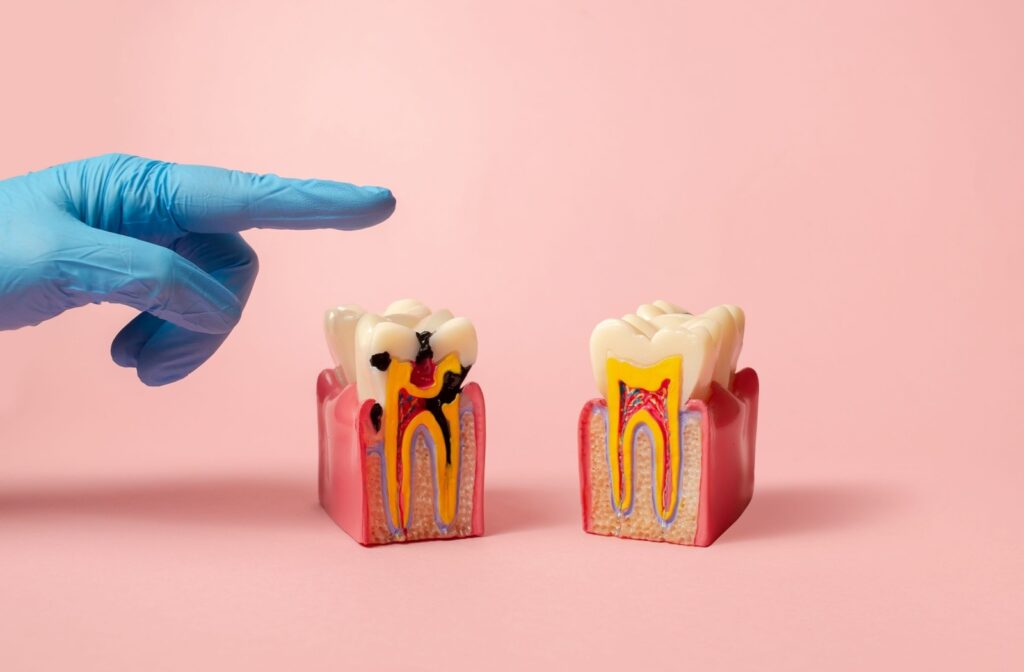
If someone you know has cavities, you might wonder if you can “catch” them too. This concern becomes even more pressing when you’re sharing meals, kissing your partner, or caring for young children. Understanding how cavity development and bacterial transmission work helps you make informed decisions about protecting your oral health.
Cavities themselves are not contagious, but the bacteria that cause them can spread from person to person through saliva. The good news is that simple daily habits and regular dental checkups can help protect you from cavity-causing bacteria while maintaining close relationships.
How Cavity-Causing Bacteria Can Spread
Cavity-causing bacteria live in saliva and can be transferred when you share that saliva with others. These bacteria feed on sugars in your mouth and produce acid that damages tooth enamel over time. Common ways these bacteria spread include:
- Sharing utensils, cups, or food
- Kissing
- Parents tasting baby food before feeding
- Using the same toothbrush
What Happens When Bacteria Enter Your Mouth
When these bacteria enter your mouth, they don’t automatically create cavities. Your existing oral environment plays a huge role in whether the bacteria can cause damage.
Your mouth is sometimes compared to an ecosystem: Bacteria have to compete with existing bacteria and face your body’s natural defences. Your saliva helps wash away harmful bacteria and combats the acids they produce.
Why Some People Get Cavities & Others Don’t
Several factors determine whether transferred bacteria can cause problems in your mouth, including:
- Existing oral health conditions
- Diet and sugar consumption
- Saliva production levels
- Daily oral hygiene habits
Is It Safe to Kiss Someone with Cavities?
You don’t need to avoid kissing your partner if they have cavities, but taking some precautions can help reduce your risk of bacterial transfer.
Simple Steps to Reduce Risk
To help protect your oral health, couples can wait until the cavity receives treatment and avoid sharing drinks. It’s important to note, though, that if both partners work to maintain good oral hygiene, the transfer of saliva doesn’t automatically mean a cavity will appear.
How Parents Can Protect Their Children
Children are more vulnerable to cavity-causing bacteria because their oral microbiome is still developing. Parents can sometimes unknowingly transfer bacteria to their children through everyday caregiving activities.
Young children’s teeth are also more susceptible to acid damage, making prevention even more important. Here’s how you can protect your little ones:
- Avoid sharing spoons when feeding babies
- Don’t clean pacifiers with your mouth
- Teach proper brushing techniques early
- Schedule regular family dental checkups
Daily Habits That Prevent Cavity Transmission
When Someone Has a Cavity
If a family member currently has untreated cavities, it’s a good idea to take a few extra precautions until they can receive dental care. Make sure to:
- Use separate cups and utensils temporarily
- Focus on extra thorough brushing and flossing
- Use separate toothbrushes and replace them regularly
- Limit sugary snacks and drinks to limit bacterial growth

The Role of Regular Dental Cleanings
Routine dental visits help reduce cavity-causing bacteria, lowering risk for the whole household. When 1 family member receives treatment for cavities, it benefits everyone by reducing the bacterial load in shared spaces.
Professional cleanings also remove bacterial buildup that daily brushing might miss. Your dentist can identify which family members might be at higher risk and provide targeted prevention strategies.
Prevent Cavities by Booking an Appointment
At Dentistry on Danforth, we help you maintain a healthy smile through comprehensive preventive care and education. Our team takes the time to understand your unique needs and create a personalized plan that works for your lifestyle. Schedule your next checkup today to keep your smile healthy and bright.